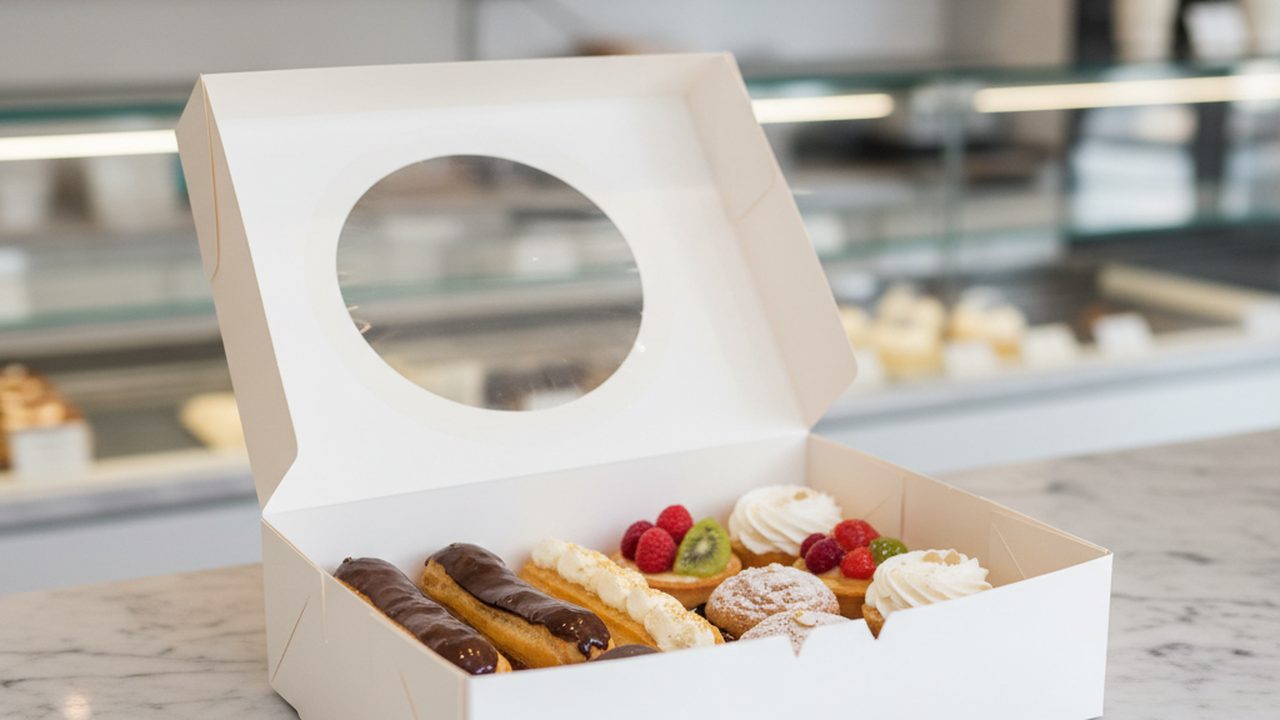
A patisserie box is more than just a pretty container: it's food-contact packaging, often for greasy and moist products. It must therefore balance food safety, structural integrity, and visual appeal. Here are the key factors to consider.
The Board: Certified for Food Contact
Not all paperboard is suitable for direct contact with food. You need a board certified for food contact, with compliant inks and varnishes. For very greasy products (such as pastries or oriental sweets), a functional barrier or a special grease-resistant board is needed to prevent migration and grease stains.
Lamination: Yes, But Make It Suitable
Lamination protects against moisture and makes it easy to wipe away marks, but it must remain food-contact compatible — and, ideally, not compromise recyclability. Lamination is often applied only to the exterior, leaving the interior surface of the board uncoated for direct product contact.
The Window: Showcase Without Exposing
A window showcases the product and reassures the customer. There are two options: an open window (a simple, cost-effective die-cut, but less protective) or a patched window (a food-safe transparent film, offering better protection). The choice depends on the product and how long it will be displayed.
The Structure: It Must Be Sturdy
- Crash-lock base or tuck-in base, depending on the load and required assembly speed.
- Sufficient grammage to support the weight without buckling.
- A handle or an 'individual slice' format for easy customer transport.
Safe, Compliant… and Appealing
Once safety is guaranteed, the visual design takes over: your logo, colours, and a well-placed window. Printivo designs personalised patisserie boxes, using board certified for food contact, produced and finished in Casablanca — compliant with ONSSA regulations and ready to entice customers in your display case.